The Art of Description
The description you write is the bridge between your musical vision and the artwork AI creates. A vague description produces generic results; a vivid, specific description produces something that actually captures your sound. The difference isn't length-it's intentionality.
This guide focuses specifically on writing descriptions for ReleasKit, but the principles apply to any AI image generation. You'll learn how to translate abstract musical concepts into concrete visual language that AI can interpret effectively.
Think of your description as a creative brief for a designer who's never heard your music-what would they need to know to capture its essence?
Why Most Descriptions Fall Flat
Before diving into what works, let's address what doesn't. The most common mistake is describing what you want the image to be rather than what you want it to feel like.
Generic descriptions produce generic results:
"A cool album cover for my hip-hop track" gives the AI almost nothing to work with. What makes it "cool"? What kind of hip-hop? The AI will default to clichés because you haven't given it anything specific.
Overly literal descriptions miss the point:
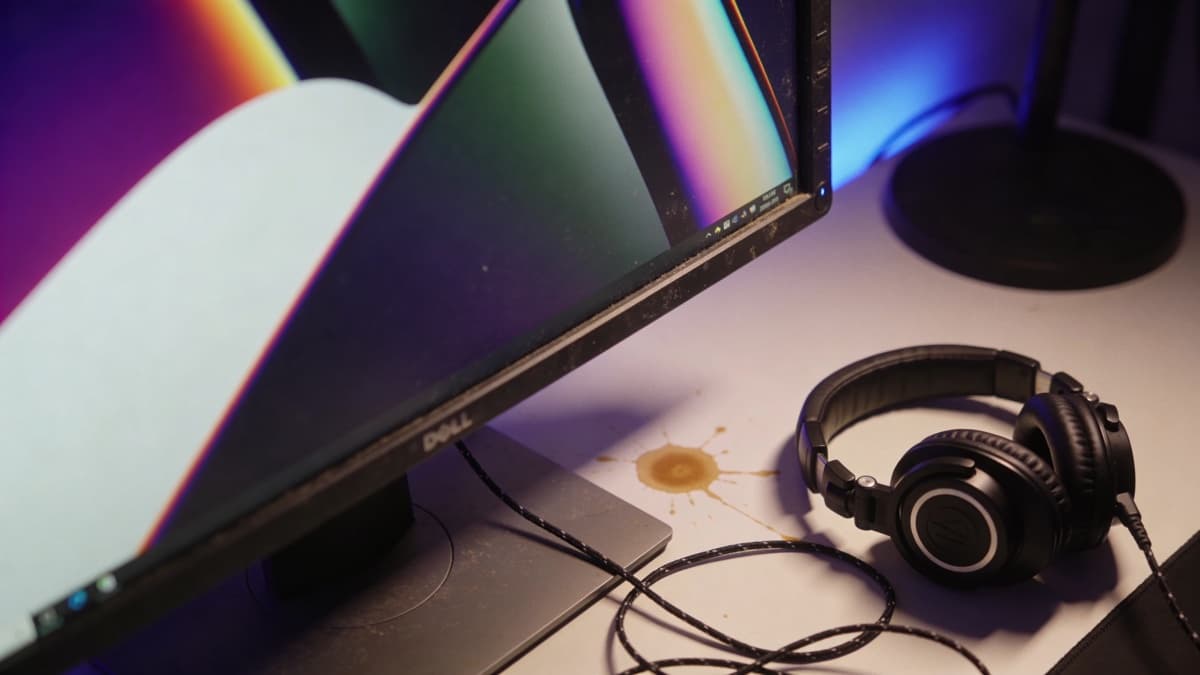
"A microphone and headphones on a desk" describes objects, not a vision. Album art rarely works as literal illustration of music-making. The connection between image and music should be emotional and atmospheric, not documentary.
Technical jargon doesn't translate:
"808s with lots of reverb and a pitched vocal sample" describes sound, which AI can't visualize. You need to translate sonic qualities into visual equivalents-what does that reverb feel like? What atmosphere does that pitched vocal create?
Start with Feeling, Not Objects
The most effective descriptions begin with emotional and atmospheric qualities. Before thinking about specific imagery, ask yourself: what's the dominant feeling of this track?
Consider these emotional dimensions:
Energy level: Is it contemplative and still, or driving and intense? Melancholic and heavy, or euphoric and light? This fundamental quality shapes everything else.
Temperature: Does it feel warm and inviting, or cold and distant? Warm might translate to amber tones, soft lighting, organic textures. Cold might mean blue shadows, harsh light, metallic surfaces.
Space: Is it intimate and close, or vast and expansive? A bedroom confession needs different visual space than an arena anthem. Consider whether the listener feels held close or gazing at something distant.
Time: Does it evoke a specific era or feel timeless? Nostalgic for a particular decade? Futuristic? This influences everything from color palette to texture treatment.
A description built on these foundations-"contemplative, warm, intimate, nostalgic for late 90s"-gives AI far more to work with than a list of objects.
Translating Sound to Sight
Music exists in time; images exist in space. Translating between them requires finding visual equivalents for sonic qualities. Here are some mappings that work:
Heavy bass → visual weight and density. Dark colors, solid masses, gravity. Think concrete, shadow, things pressing down.
Airy, spacious production → negative space and light. Sparse compositions, pale colors, room to breathe. Fog, sky, distance between elements.
Distortion and grit → texture and grain. Film noise, rough surfaces, imperfection. Nothing too clean or polished.
Reverb and echo → blur and atmosphere. Soft focus, haze, things dissolving at edges. The visual equivalent of sound diffusing through space.
Sharp, percussive sounds → hard edges and contrast. Clear lines, stark lighting, defined shapes. Precision rather than softness.
Layered, complex arrangements → visual density and detail. Multiple elements, things to discover, richness that rewards attention.
Instead of saying "my track has lots of reverb," try "an atmosphere where everything feels like it's dissolving into fog, edges soft and indistinct."
Specificity Creates Uniqueness
Generic words produce generic images. The more specific your language, the more distinctive your results. This doesn't mean writing longer descriptions-it means choosing precise words.
Instead of "blue," specify the blue: Navy, cerulean, teal, midnight, electric, powder, steel. Each evokes different associations and produces different results.
Instead of "city," specify the city: A Tokyo side street at 2am. A brutalist council estate in grey afternoon light. Downtown LA reflected in wet pavement. Geographic and temporal specificity creates authenticity.
Instead of "sad," specify the sadness: Wistful longing for something that never existed. The quiet emptiness after everyone leaves. Grief that's aged into gentle melancholy. Different sadnesses look completely different.
Instead of "vintage," specify the vintage: Polaroid in 1975. VHS tracking errors. Faded magazine from 1989. A Soviet-era postcard. Each reference point carries distinct visual characteristics.
One vivid, specific phrase-"the orange glow of a streetlight through a rain-covered car window at 3am"-generates more interesting results than paragraphs of vague adjectives.
Using Reference Points
Sometimes the fastest path to what you want is referencing things that already exist. This doesn't mean copying-it means using shared cultural touchstones to communicate complex aesthetics quickly.
Visual artists and photographers: "The color palette of William Eggleston's suburban photography" or "the surreal scale of Salvador Dalí" gives AI rich reference points. You don't need to name-drop; describe what you appreciate about their work.
Films and cinematography: "The neon-noir atmosphere of Blade Runner" or "the sun-bleached emptiness of Paris, Texas" references distinctive visual languages. Films are particularly useful because they combine color, lighting, and mood.
Time periods and movements: "1970s prog rock album aesthetic" or "Memphis design movement" references established visual vocabularies. These work well combined with other specifications.
Textures and materials: "The grain of expired Kodak film" or "oxidized copper" references specific physical qualities that translate well visually.
In ReleasKit, you can also upload reference images directly. If words aren't capturing what you want, a visual example often communicates more efficiently than description.
Combining Description with Style
ReleasKit lets you select a visual style alongside your description. These work together: your description provides the content and atmosphere; the style shapes how that content is rendered.
Minimalist: Works best with descriptions focused on single powerful elements or vast empty space. Don't describe lots of detail-describe one thing with presence.
Photorealistic: Reward specific, grounded descriptions. Real places, real lighting conditions, physical textures. The more your description sounds like a photograph that could exist, the better.
Illustrated: Can handle more fantastical or abstract descriptions. Elements that couldn't exist in reality work here. Think about what you'd brief an illustrator to draw.
Vintage/Retro: Benefits from era-specific references. Don't just say "vintage"-specify which era's vintage and what medium (film photography, print advertising, etc.).
Surreal/Psychedelic: Embrace impossible juxtapositions and dreamlike logic. Describe things that shouldn't fit together, or ordinary things behaving strangely.
Dark/Noir: Focus on shadow, mystery, and atmosphere. Describe what's hidden as much as what's visible. Lighting becomes crucial.
Iteration Is Part of the Process
Even excellent descriptions rarely produce perfect results on the first try. The most effective workflow treats initial generations as starting points for refinement.
When you see results, ask yourself: what's working that I want to keep? What's missing that I need to add? What appeared that I didn't want? Use these observations to refine your description or request specific edits.
ReleasKit's edit function lets you refine generated artwork with targeted instructions. "Make the shadows deeper," "shift the color palette warmer," "remove the element in the corner"-these surgical adjustments often get you to the final image faster than rewriting your entire description.
Keep your original description as a foundation and layer refinements on top. The goal isn't one perfect prompt-it's a conversation that moves toward your vision through iteration.
The best descriptions come from artists who've generated a few covers and learned what language produces what results. Your first attempts are training for your better attempts.
Example Descriptions That Work
Here are some effective descriptions and what makes them work:
For an introspective indie track:
"Early morning light through dusty blinds, the quiet of a room where someone just woke up alone. Warm but melancholy. Muted earth tones-ochre, cream, soft brown. Something about stillness and the weight of ordinary moments. Feels like a photograph found in a used book."
For aggressive electronic music:
"Industrial decay meeting digital precision. Concrete textures, harsh fluorescent light casting sharp shadows. Color palette limited to grays with occasional toxic green accents. Cold, mechanical, but with underlying chaos-like a factory that's malfunctioning beautifully."
For nostalgic R&B:
"Late 90s softness-the glow of a TV in a dark room, VHS warmth. Purple and gold tones, slight blur like a memory that's fading at the edges. Intimate but cinematic. Something about being young and in love in the city at night."
For experimental ambient:
"Vast and empty, like standing in a space too large to comprehend. Pale gradients dissolving into each other. No hard edges anywhere-everything bleeds into everything else. The visual equivalent of a tone that sustains forever. Peaceful but slightly unsettling."
Notice how each description focuses on feeling and atmosphere first, uses specific sensory language, and avoids generic terms. None of them describe literal objects-they describe experiences.
FAQ