Rock's Visual Heritage
Rock album art carries weight. From Abbey Road's crosswalk to Dark Side of the Moon's prism, from Nevermind's swimming baby to Unknown Pleasures' pulsar waves-the genre has produced some of the most iconic imagery in popular culture. Any rock release enters a conversation that spans decades.
This heritage creates both opportunity and pressure. Rock audiences have sophisticated visual expectations developed over fifty years of legendary artwork. They'll recognize when you're referencing Hipgnosis, when you're channeling punk DIY, when you're reaching for metal intensity. You don't need to reinvent anything-but you need to understand what you're working with.
Rock artwork exists in conversation with rock history. Know what came before to find your place in what comes next.
Rock Classics - fifty years of iconic album artwork
Band Photography Traditions
The band photograph remains rock's default visual mode. Four or five people standing together, establishing collective identity. It's been done millions of times, which makes doing it well harder than it looks.
The best band photography creates visual personality that matches sonic personality. Queens of the Stone Age's stylized desert imagery. The Strokes' casual downtown cool. Arctic Monkeys' suited sophistication on AM. These aren't just pictures of people-they're statements of aesthetic position.
When shooting band photos, think about what your sound looks like. High-energy punk might suggest motion blur, tight framing, aggressive poses. Atmospheric post-rock might use wide environmental shots, soft focus, contemplative distance. The photograph should tell people what they're about to hear.
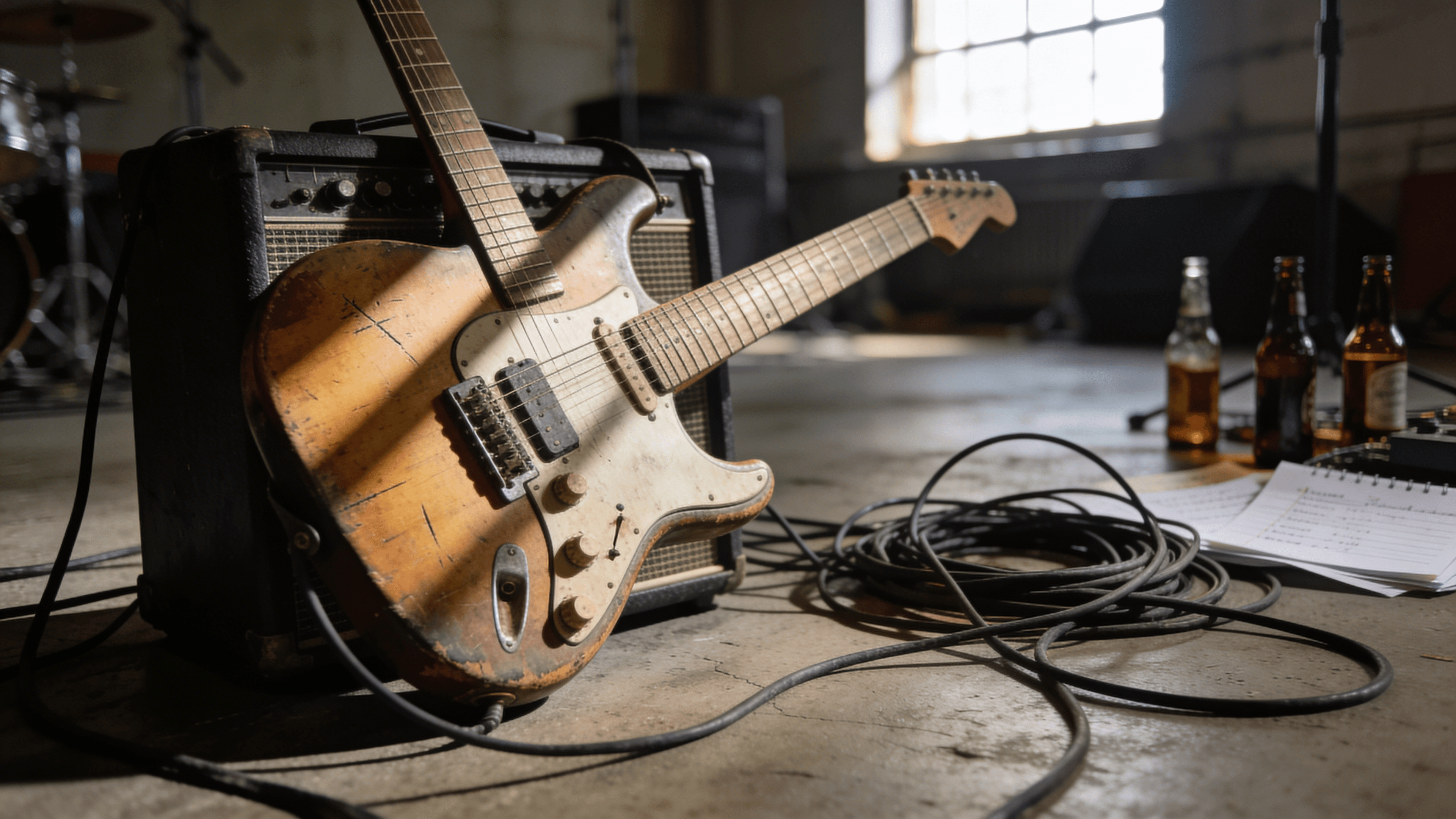
Location matters. Rehearsal spaces and alleys are clichés because they work-they communicate authenticity and working-musician identity. But they can also look generic. Better: find locations that specifically relate to your music's identity. The city where you formed. The venues where you play. Places that have genuine meaning, not just visual convenience.
Arctic Monkeys' AM - styled band photography that defined an era
Graphic Approaches
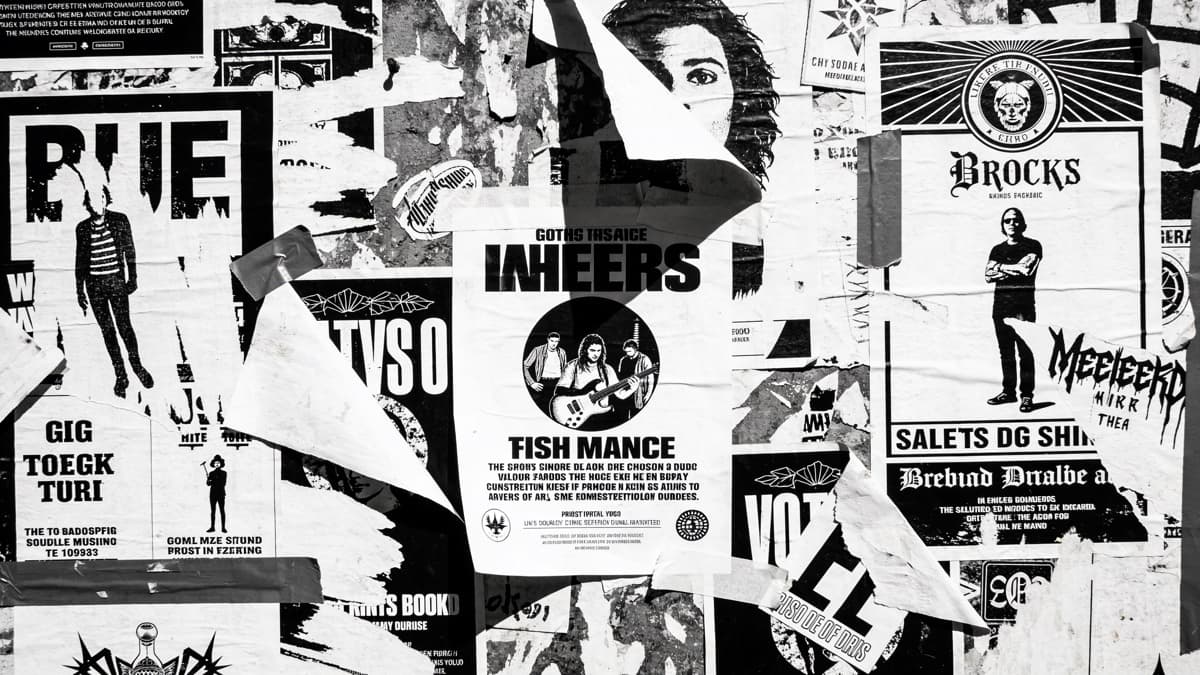
Not every rock cover needs photographs. Some of the genre's most enduring imagery is purely graphic-designed rather than photographed.
Joy Division's Unknown Pleasures proves a single image can become cultural shorthand. Peter Saville's pulsar visualization became so famous it's now printed on fast-fashion t-shirts, recognizable to people who've never heard the album. The Ramones' presidential seal. The Clash's stencil aesthetic. Rolling Stones' lips. Simple graphic ideas, executed with conviction, achieving permanence.
Graphic approaches work particularly well for artists developing visual brand identity. A strong symbol or treatment that carries across multiple releases builds recognition more effectively than unrelated photographs. Think about what visual element could become your version of the Stones' lips-distinctive enough to own, simple enough to reproduce anywhere.
The risk with graphic approaches: looking like a logo, not an album cover. There's a reason most bands save purely graphic treatments for specific projects. Balance visual branding with emotional communication.
Joy Division's Unknown Pleasures - a graphic image that became cultural icon
Subgenre Visual Conventions
Rock's visual language fragments across subgenres. What reads as authentic in one scene looks foreign in another.
Classic rock references 70s album art heritage-photography, illustration, elaborate gatefold concepts. There's room for maximalism here that other subgenres don't allow.
Indie rock typically embraces restraint. Muted colors, minimal typography, photography that suggests rather than declares. The aesthetic of understatement signals "not mainstream" even when the music reaches wide audiences. Study Secretly Canadian or Jagjaguwar releases for contemporary examples.
Hard rock and modern rock often incorporate more aggressive design-bold typography, high contrast, compositional intensity that matches sonic intensity.
Post-rock gravitates toward landscape photography, abstract imagery, vast negative space. The visual language matches the music's expansiveness and its rejection of rock star imagery.
Know where your music sits in this landscape. Visual cues help listeners understand what they're getting before they press play.
Typography in Rock
Rock typography spans the entire spectrum from elaborate custom work to intentionally plain type. Band logos, album title treatment, and credits all contribute to visual identity.
Some bands develop logos that persist across careers-AC/DC's lightning bolt, Metallica's sharp letters, KISS's stylized face-letters. These investments in visual branding pay dividends in recognition and merchandise. Consider early whether your band name lends itself to distinctive typographic treatment that could become permanent identity.
Album title typography usually complements rather than matches the logo. If your logo is elaborate, simpler album titles provide balance. If your visual identity is minimal, titles might carry more design weight.
Sans-serif fonts dominate contemporary rock covers, but serif faces carry weight for certain approaches-particularly anything referencing classic rock heritage. Display fonts add personality but risk looking dated. The safest approach: distinctive but timeless type choices that won't embarrass you in ten years.
Creating Rock Covers
Start by studying your influences-not just sonically, but visually. What album covers represent where you want to position yourself? Analyze specifically what makes them work: color palette, photography style, typography, composition.
If shooting band photography, allocate time and attention. Location scouting, styling coordination, multiple shooting sessions. The "casual" look of great band photos comes from extensive shooting and rigorous selection-not actually casual effort.
For graphic or conceptual approaches, develop your idea before executing. What's the central image? How does it relate to the music? What references is it making? Clear concepts executed simply beat vague concepts executed elaborately.
Technical requirements: 3000x3000 pixels minimum for streaming platforms. See our complete platform guide. If you're planning physical releases, work at higher resolution from the start.
ReleasKit can generate concepts that understand rock visual conventions-describe your sound and aesthetic position, and explore what emerges as starting points.
The best rock covers feel inevitable-like no other image could represent this music.
FAQ